
Sustine et Abstine (Endure and Abstain): An investment philosophy rooted in Kant's dual reverence for the external vastness of markets and the internal moral law, teaching endurance of uncomfortable truths and abstinence from self-deception to preserve judgment.
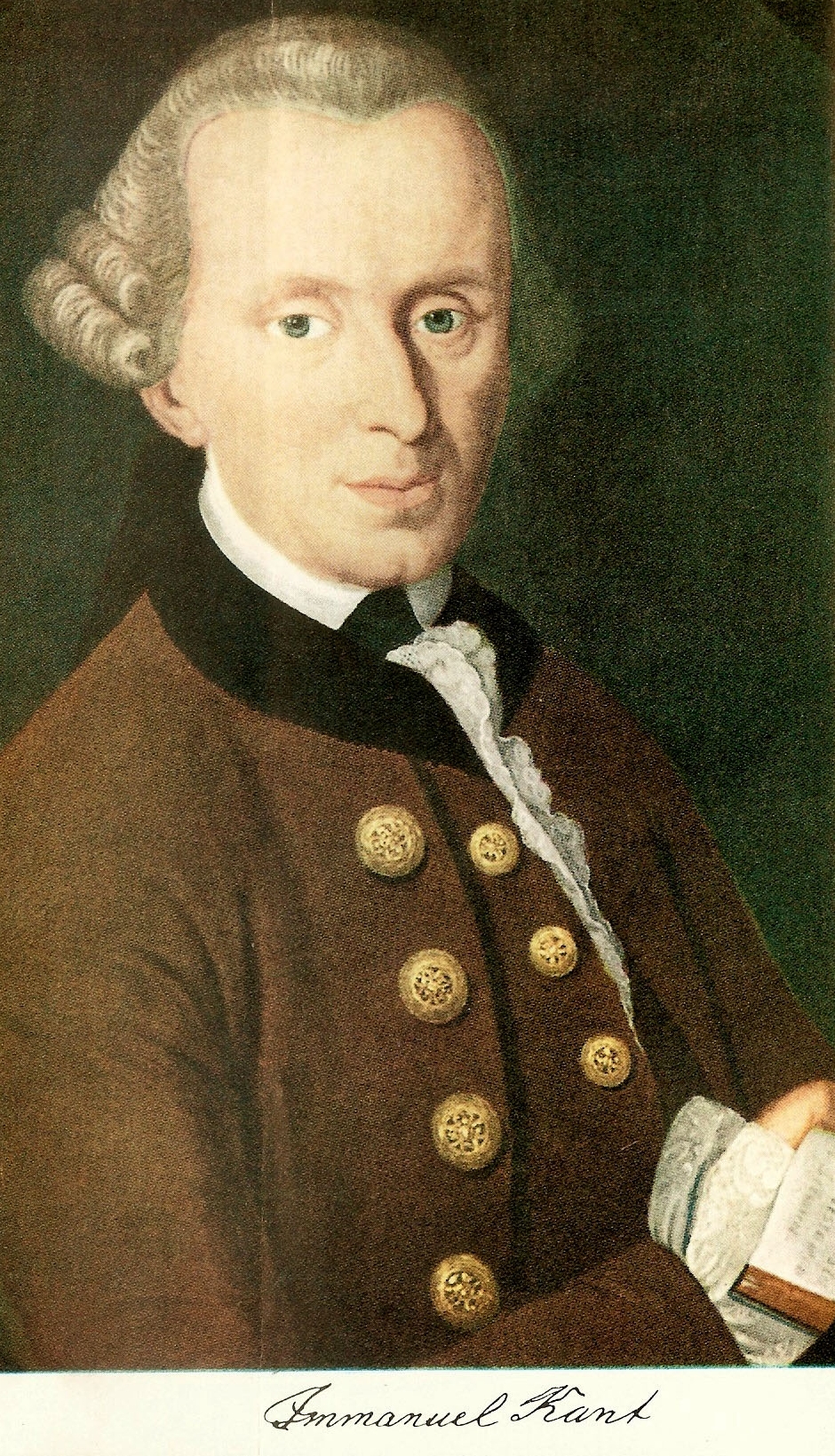
Zwei Dinge erfüllen das Gemüt mit immer neuer und zunehmender Bewunderung und Ehrfurcht, je öfter und anhaltender sich das Nachdenken damit beschäftigt: der bestirnte Himmel über mir und das moralische Gesetz in mir.
Two things fill the mind with ever new and increasing admiration and awe, the more often and steadily reflection is occupied with them: the starry heaven above me and the moral law within me.
— Immanuel Kant, Critique of Practical Reason (1788), Conclusion
These are the final lines of Kant's second Critique. They appear almost without warning — after hundreds of pages of dense, technical argument about the structure of practical reason — and then suddenly the curtain is drawn back, and you are standing in the open air.
The Two Infinities
The starry heaven is the infinity of space and time. Kant was not speaking poetically. He meant it literally: when you look up at the night sky, you are confronted with a scale of existence so vast that your own life, your ambitions, your anxieties, become geometrically small. The cosmos does not know your name.
But notice that Kant pairs this external infinity with an internal one. The moral law within — what he elsewhere calls the categorical imperative — is not a rule imposed from outside. It is reason legislating to itself. The wonder Kant feels at the starry heaven is matched, precisely, by the wonder he feels at the fact that a finite, mortal, often confused creature like a human being can nonetheless arrive at universal moral principles through pure reason.
Two infinities. One above. One within.
What This Has to Do with Humility
Intellectual humility is not self-deprecation — not the posture of "I could be wrong about everything." That is paralysis dressed as modesty.
Kant's humility is more precise. The starry heaven reminds him that his perspective is local, time-bound, and incomplete. But the moral law reminds him that he is not merely small. He participates in something universal. The tension between these two is productive: it keeps him from both arrogance and nihilism.
For investors, this is the correct epistemic posture. Markets, like the cosmos, are larger than any single mind. The history of financial catastrophes is largely the history of people who forgot the starry heaven — who began to believe their model was the territory, their framework was reality, their recent success was permanent.
Charlie Munger, who kept Kant's spirit without the German footnotes, put it plainly: "I have nothing to add." He said this at Berkshire meetings when he agreed with Buffett. But the deeper meaning is structural — a recognition that the wisest response to complexity is often silence, observation, and the willingness to update.
The Moral Law in the Portfolio
The second half of Kant's formulation is less often quoted in investment writing, perhaps because it sounds too abstract. But it matters.
The moral law within is what keeps an investor honest when no one is watching. It is what prevents the gradual corruption that comes from small compromises: rounding up the estimates, confirming the thesis before examining the counter-evidence, staying in a position because admitting the mistake is uncomfortable.
Kant would say: your inner moral legislator knows. You cannot fool it. And the cost of ignoring it is not just a bad trade — it is the slow erosion of the instrument you most need: your own judgment.
This is what the phrase sustine et abstine points toward. Endure what must be endured. Abstain from what reason tells you to refuse. The starry heaven above teaches proportion. The moral law within teaches integrity.
Caelum, non animum, mutant qui trans mare currunt. — Horace: They change their sky, not their soul, who cross the sea. The inner compass does not update with the market.
FAQ
What is the meaning of Kant's quote 'the starry heaven above me and the moral law within me'?
Kant's quote from the Critique of Practical Reason expresses awe at two infinities: the external cosmos that dwarfs human existence, and the internal capacity of reason to generate universal moral principles. It captures the tension between our smallness in the universe and our ability to legislate moral laws through pure reason.
How does the 'starry heaven' metaphor apply to investing?
The starry heaven represents the vast, complex, and unpredictable nature of financial markets, which no single mind can fully comprehend. It reminds investors to remain humble, acknowledge their cognitive limitations, and avoid the arrogance of believing that their models capture the whole truth.
What is intellectual humility in investing according to Kant?
Kantian intellectual humility is not self-doubt but the productive tension between recognizing one's limited perspective and trusting one's reasoned judgment. For investors, it means balancing a healthy respect for the market's scale with the conviction to act on well-reasoned decisions while staying open to correction.
What does 'sustine et abstine' mean and how is it relevant to investors?
'Sustine et abstine' is a Latin phrase meaning 'endure and abstain.' In investing, it encapsulates the discipline to endure market truths and the patience to abstain from impulsive actions or self-deception, guided by both external reality and an internal moral compass.
How can investors maintain integrity according to Kant's moral law within?
The moral law within serves as an inner legislator that demands honesty, even when no one is watching. Investors maintain integrity by resisting small compromises like biased analysis or refusal to admit mistakes, because such lapses erode the judgment crucial for long-term success.
The starry heaven above teaches proportion, the moral law within teaches integrity, and the investor who holds both in tension will neither fall to arrogance nor to self-betrayal. — sustine.top