
Reading Buffett's 2025 Letter: What the Oracle Actually Said (and What He Didn't)
The Berkshire Hathaway annual shareholder meeting is the one investor communications event that functions simultaneously as financial disclosure, philosophical seminar, and trust-building exercise. At 94, Warren Buffett used the 2025 meeting — his 60th — to do something subtler than announce strategy: he introduced his successor to the world, disclosed what he fears most about America's future, and, characteristically, said almost nothing about the next twelve months.
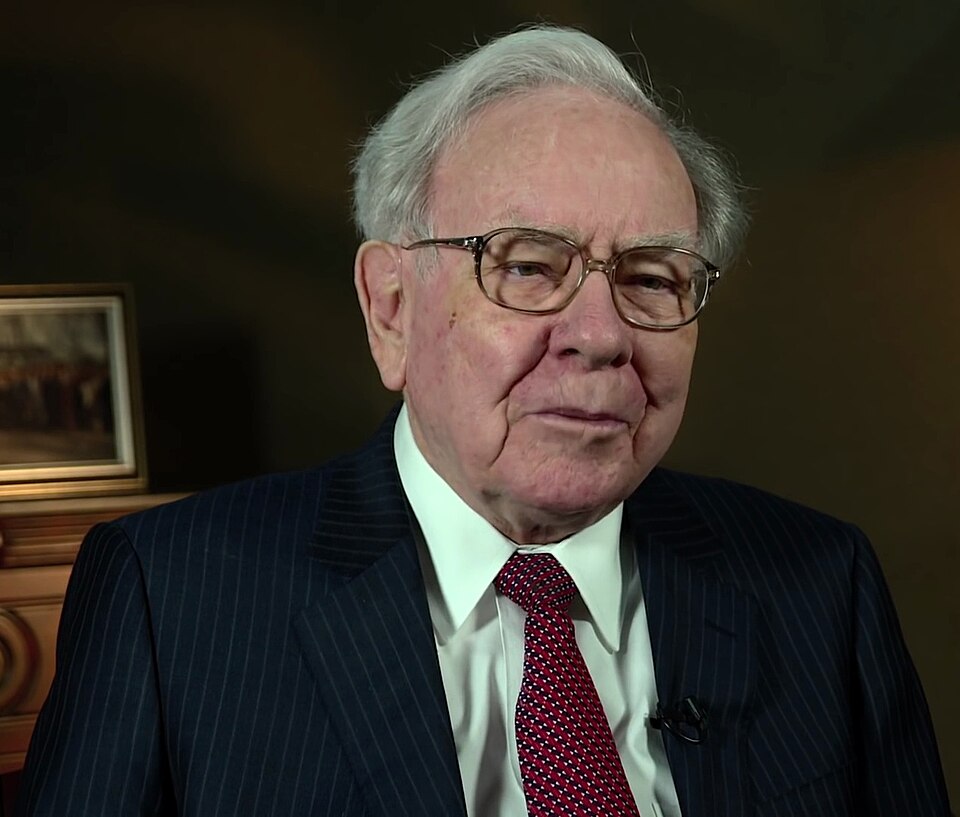
The 2025 Berkshire Hathaway annual meeting drew a record 19,700 people to Omaha on a single afternoon. Every subsidiary set sales records. Three thousand runners signed up for the accompanying 5K. Buffett opened proceedings by thanking Tim Cook, seated in the audience, with characteristic directness: "Tim Cook has made Berkshire a lot more money than I've ever made Berkshire Hathaway." It was a disarming move — crediting someone else, at the outset, for your company's best investment outcome. The message embedded in that gesture was the same one woven through every significant moment in the meeting: character and judgment compound better than clever tactics.
The Greg Abel Introduction: A 94-Year-Old's Most Important Work
Observers looking for the single most consequential development in the 2025 meeting should look not at the financial disclosures but at how Buffett repeatedly positioned Greg Abel — by answering questions jointly, by deferring operational detail to him, by letting Abel speak with authority on Japan, on capital allocation, on energy infrastructure.
When a shareholder asked directly what makes Abel his preferred successor, Buffett gave an answer worth annotating closely:
"You've hit on the most important question in terms of the business. We've got a wonderful group of businesses. We've got an ability to do things that nobody else can do... It takes a long long time and it takes getting around you a small cadre of people which then spreads out somewhat. Where you've got mutual trust, where people do more than their share."
Notice what Buffett does not say. He does not cite Abel's financial modeling capability, his deal-making record, his strategic vision statements. He talks about trust and people doing more than their share. This is the same framework he has used to describe Tom Murphy Sr., Walter Scott, Sandy Gottesman — the people he considers the finest managers he has encountered. Berkshire's succession is, in Buffett's understanding, not primarily a capital allocation problem. It is a culture preservation problem. And he has been solving it, quietly, for years.
Abel reinforced this reading in his own remarks on capital allocation:
"One: we will maintain the reputation of Berkshire and that of our company... Looking at our balance sheet, as Warren commented, we will have a fortress of a balance sheet... We will remain Berkshire and will never be dependent on a bank or some other party for Berkshire to be successful."
This is not the language of a manager who has been handed a strategic plan. It is the language of someone who has absorbed a philosophy. The succession, based on the 2025 meeting, appears more complete than outsiders may have recognized.
The Cash Position: What He Said, and the Question He Deflected
Berkshire held over $300 billion in cash and short-term instruments at the time of the meeting — roughly 27% of total assets, against a historical average of 13%. A shareholder pressed Buffett directly: is this primarily a de-risking response to high valuations, or a deliberate positioning to give Greg Abel maximum flexibility for his tenure?
Buffett's reply was characteristically amusing and simultaneously evasive:
"Well, I wouldn't do anything nearly so noble as to withhold investing myself just so that Greg could look good later on. If he gets any edge of what I leave behind, I'll resent it."
The joke deflects the underlying question. He then gave the actual answer:
"The amount of cash we have — we would spend $100 billion if something is offered that makes sense to us, that we understand, offers good value, and where we don't worry about losing money. The problem with the investment business is that things don't come along in an orderly fashion, and they never will."
The more revealing remark came when discussing the logic of patience:
"We would rather have conditions develop where we would like $50 billion in cash rather than $335 billion in treasuries. But that's just not the way the business works. We have made a lot of money by not wanting to be fully invested at all times."
This is the admission worth marking: $335 billion in treasuries is not a strategic preference. It is the residue of a world where, at Berkshire's scale, genuinely attractive opportunities are rare. Buffett noted that Munger always believed they made most of their money from approximately eight or nine ideas over fifty years. The $300 billion in cash is not optimism about future deals — it is a mathematically honest acknowledgment of how few truly excellent opportunities exist for an entity of Berkshire's size.
The individual investor reading this should extract a principle rather than a practice: Buffett holds cash because deploying it badly is worse than holding it. The lesson is not to hold cash at your scale. The lesson is to never manufacture busyness where genuine opportunity is absent.
Japan: The Model for a 50-Year Investment Thesis
The Japan investment — initiated quietly after Buffett spent a year going through a handbook of two or three thousand Japanese companies — received significant discussion. He and Abel confirmed they have no intention of selling the five trading companies in "decades, if then."
"In the next 50 years, we won't give a thought to selling those positions."
Abel amplified what the investment represents operationally:
"The thing we're building with the five companies is, one, it's been a very good investment, but we really envision holding the investment for 50 or forever. We also are building relationships to do incremental things with each of those companies. We really hope to do big things with them globally."
The Japan position is instructive not for its specific mechanics but for what it reveals about Berkshire's approach to international capital allocation. Buffett identified five businesses selling at "ridiculously low prices," accumulated positions, respected the companies' operating culture ("Our main activity is just to cheer and clap"), borrowed cheaply in yen to fund equity held in yen, and built a relationship rather than simply a holding.
This is the "turn every page" methodology applied globally. Buffett described the original discovery: "I never dreamt of that when I picked up that handbook. It's amazing what you can find when you just turn the page... Very few people do turn every page, and the ones who turn every page aren't going to tell you what they're finding."
The silence here is also instructive. Buffett was asked about the Bank of Japan's rate hike trajectory and whether it would deter further investment. He declined to forecast Japanese monetary policy, offered the deadpan response that he would "extend the same goodwill to Japan that you've just extended to me" — and said he would let Japan determine its own best course. He knows what he does not know. He builds positions around what he does know.
What Buffett Did Not Say
Close reading of any Buffett communication requires attention to the silences as much as the statements. Several notable absences deserve annotation.
He said almost nothing about specific portfolio moves. In previous meetings, Berkshire's equity portfolio reshuffling — exiting banks, entering energy companies, trimming Apple — generated extensive discussion. In 2025, the portfolio was largely a non-topic. This is consistent with Buffett's stated preference: he buys to hold indefinitely, and the equity portfolio's composition in any given year is less important than the long-term earning power of the underlying businesses.
He did not predict a market direction. When asked whether the recent market volatility (the meeting took place amid tariff-driven turbulence, with markets down roughly 15% from highs) represented opportunity, he was blunt:
"What has happened in the last 30-45 days, 100 days, whatever this period has been, is really nothing. There have been three times since we acquired Berkshire that Berkshire has gone down 50% in a fairly short period of time — three different times. Nothing was fundamentally wrong with the company at any time. This is not a huge move."
He then added: "If it had gone up 15% instead of down 15%, people would take that with remarkable grace. But if it makes a difference to you whether your stocks are down 15% or not, you need to get a somewhat different investment philosophy because the world is not going to adapt to you. You're going to have to adapt to the world."
This is not prediction. It is instruction about temperament. Buffett has never told investors when to buy or sell. He consistently tells them what kind of person they need to become.
He did not discuss cryptocurrency, AI-driven investing, or most "hot" topics. When AI came up (in the context of GEICO's telematics and insurance underwriting), Buffett deferred to Ajit Jain on specifics, then made a pointed comparative: "I wouldn't trade everything that's developed in AI in the next 10 years for Ajit. If you gave me a choice of having a hundred billion dollars available to participate in the property casualty insurance business for the next 10 years and a choice of getting the top AI product from whoever's developing it or having Ajit making the decisions, I would take Ajit anytime." The message is consistent with his entire career: human judgment, deeply developed within a circle of competence, beats technological leverage when it comes to underwriting risk.
The Fiscal Warning Hidden in Plain Sight
The most important statement Buffett made at the 2025 meeting received little financial press coverage. In discussing currency risk and the dollar's long-term trajectory, he said:
"I mentioned very briefly in the annual report that fiscal policy is what scares me in the United States because of the way it's made, and all the motivations are toward doing things that can cause trouble with money. But that's not limited to the United States — it's all over the world."
And then, elaborating:
"The tendency of a government to want to debase its currency over time — there's no system that beats that. You can pick dictators, you can pick representatives, you can do anything, but there will be a push toward weaker currencies."
Buffett has held this view for decades — it undergirds his preference for productive assets over cash over the very long term. But he said it more plainly at the 2025 meeting than he has in some years. The implication for the portfolio: Berkshire's holding of $300 billion in short-term treasuries is explicitly a temporary tactical position, not an expression of faith in the dollar's long-term purchasing power. The equity portfolio, the operating businesses, the insurance float — these are the long-term stores of value. The cash is waiting.
Individual investors who draw the wrong lesson from Berkshire's cash hoard — concluding that cash is therefore safe and stocks are risky — are misreading the situation. Berkshire holds cash because it cannot find enough at acceptable prices. Not because cash is the preferred long-term asset.
On Munger's Absence
Charlie Munger died in November 2023, 33 days short of his 100th birthday. The 2025 meeting was therefore the second without him — but the first in which his absence felt institutionally absorbed rather than freshly raw.
Buffett mentioned Munger frequently, but in a specific register: not as the voice in the room, but as the source of principles that are now being transmitted forward. When a young questioner asked about Berkshire's essential philosophy, Buffett replied simply: "Keep a lot of curiosity and read a lot, as Charlie would say."
When asked about patience versus decisive action, he described how Munger had always believed they did too many things — that doing five things in a lifetime would yield better results than doing fifty. The remark functions as both tribute and policy statement.
The treatment of Munger in 2025 follows the Berkshire pattern for those who have shaped the institution and departed: Tom Murphy, Sandy Gottesman, Walter Scott. Their names recur as reference points, their principles as operating code. Munger's mental models — inversion, multidisciplinary thinking, the avoidance of self-pity — are not being memorialized. They are being applied.
Three Principles for the Individual Investor
The 2025 meeting, read carefully, yields three principles that are applicable regardless of portfolio size.
First: temperament is the asset. Buffett spent more time discussing the psychology of investing than any specific investment. He described his own reaction to potential 50% drawdowns as viewing them as "a fantastic opportunity." He acknowledged that this reaction "doesn't come without a lot of thought." Temperament is not innate; it is trained through reading, through understanding what you own, and through direct experience with market dislocations over time.
Second: activity is not evidence of diligence. Berkshire's $300 billion cash position is not laziness — it is discipline applied at scale. The individual investor version of this principle: the rate of portfolio decisions is not a measure of investment quality. The question is not "have I been busy enough?" but "have I deployed capital only where I had genuine conviction and genuine edge?"
Third: the investment horizon determines everything. Abel stated explicitly that the Japan investment is conceived over 50 years. Buffett noted that Berkshire has "never been to a board meeting where I've said, 'If we do this, our annual earnings will be this, therefore we ought to do it.'" When the time horizon extends to decades, the analysis changes fundamentally. Quarterly earnings become noise. Durable competitive advantage, management quality, and capital allocation discipline become the only variables that matter.
The 2025 Berkshire meeting was, at its core, a handoff document — not the formal transfer of authority, which happened years ago, but the public demonstration that the philosophy is intact and has been transmitted. Buffett, at 94, was not summarizing a career. He was teaching one last time to 40,000 people in Omaha and however many more watching around the world.
His closing instruction to a 14-year-old shareholder from Hong Kong who had queued since 2 AM: "Keep a lot of curiosity and read a lot."
Sixty years of compounding, reduced to its simplest expression.