
Mr. Market is a fictional business partner invented by Benjamin Graham to represent the stock market's daily pricing mechanism, characterized by manic-depressive mood swings that create irrational prices from which a disciplined investor can profit or ignore.
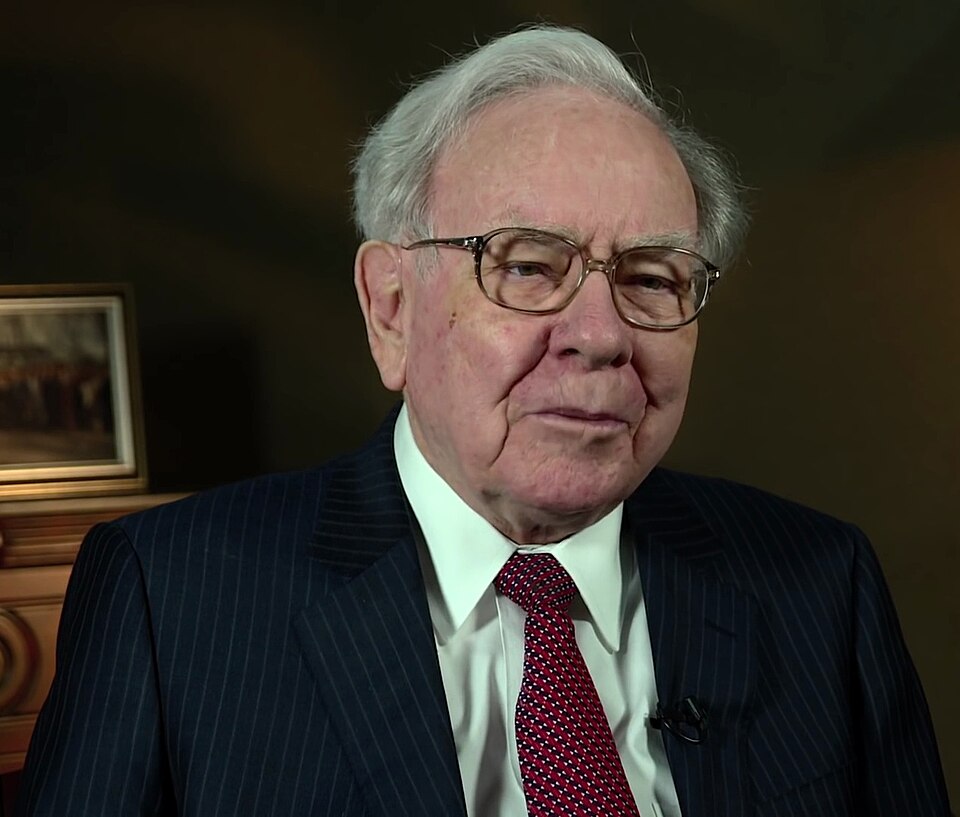
Mr. Market is a fictional business partner invented by Benjamin Graham in 1949 to represent the daily pricing mechanism of stock markets. He is manic-depressive, shows up at your door every day with an offer to buy or sell, and is entirely harmless — provided you remember one thing: you are never obligated to trade with him. Understanding this character completely transforms how an investor relates to price.
---
The Man Who Had Every Reason to Distrust Markets
Before we can understand Mr. Market, we need to understand why Benjamin Graham invented him — and that requires beginning not on Wall Street but on a steamship crossing the Atlantic in 1895.
Benjamin Grossbaum — he later anglicised his surname to Graham during the First World War, when Germanic names carried social cost — arrived in New York as an infant. His father, Isaac Grossbaum, ran a china and bric-a-brac importing business in lower Manhattan. Isaac was, by the accounts of those who knew him, charming and resourceful. By Ben's own account, Isaac was also given to menacing threats toward his sons, a man who could appropriate a child's moment of glory — Ben once recited poetry for the family, and felt his father somehow claimed the credit — as casually as he might pocket loose change.
Isaac died of pancreatic cancer when Ben was eight or nine years old. A boy of that age cannot fully process what this means. He learns it slowly, through what follows.
What followed was financial catastrophe. Dorothy Grossbaum, Ben's mother, had no business training and no independent resources. She converted the family's living room into a boarding house and attempted to run it. She also tried her hand in the stock market — it was the first decade of the twentieth century, and the market's siren song was loud. In the Panic of 1907, she was buying shares on margin. The margin call came. The savings evaporated.
Dorothy, ground down by grief and financial terror, at one point told her son that she had initially wished he had been born a girl, that she had wanted to throw him out the window. She pressured her sons constantly to restore the family fortunes. The household where Ben Graham grew into a young man was one in which money had once existed and then violently, publicly, humiliatingly, did not — and in which a clever, sensitive boy understood at the cellular level that markets could devour a family's security in an afternoon.
This is where value investing was born. Not in a seminar room. Not from a theoretical breakthrough. From a child watching his mother lose everything because she had no framework for separating price from value, no buffer between market noise and family survival.
Graham graduated from Columbia University at twenty years old, near the top of his class, and turned down academic appointments in three departments — English, mathematics, and philosophy — because Wall Street paid better. He spent the 1920s doing well in the market. Then 1929 arrived, and the years that followed. His partnership's account value fell by roughly seventy percent between 1929 and 1932. He recovered, but the experience confirmed what his childhood had already taught him: markets, left unexamined, are emotional engines that will destroy the unprepared.
By 1934, he and David Dodd had published Security Analysis. By 1949, he published the work that would endure: The Intelligent Investor. In Chapter Eight of that book, Graham offered his readers a gift — a character, a parable, a complete re-framing of what the stock market actually is and what it is for.
He called the character Mr. Market.
---
The Original Passage
Graham wrote it plainly, in prose with the precision of a man who had spent decades noticing exactly where investors go wrong. The passage from Chapter Eight of The Intelligent Investor deserves to be read in full rather than summarised:
*Imagine that in some private business you own a small share that cost you $1,000. One of your partners, named Mr. Market, is very obliging indeed. Every day he tells you what he thinks your interest is worth and furthermore offers either to buy you out or to sell you an additional interest on that basis. Sometimes his idea of value appears plausible and justified by business developments and prospects as you know them. Often, on the other hand, Mr. Market lets his enthusiasm or his fears run away with him, and the value he proposes seems to you a little short of silly.*
>
*If you are a prudent investor or a sensible businessman, will you let Mr. Market's daily communication determine your view of the value of a $1,000 interest in the enterprise? Only in case you agree with him, or in case you want to trade with him. You may be happy to sell out to him when he quotes you a ridiculously high price, and equally happy to buy from him when his price is low. But the rest of the time you will be wiser to form your own ideas of the value of your holdings, based on full reports from the company about its operations and financial position.*
>
*The true investor is in that position. He can take advantage of the daily market price or leave it alone, as dictated by his own judgment and inclination.*
That is the whole of the parable. Fifty years of investing experience, compressed into three paragraphs. The character of Mr. Market appears in this brief passage and nowhere else in Graham's formal writing — and yet he may be the most quoted fictional character in the history of financial literature.
What does it actually say? It says: Mr. Market is your partner, not your boss. He has a mood disorder that produces wild swings in his perception of value. He will offer you a price every single day. You are free — entirely free — to decline.
---
What Mr. Market Actually Solves
Most people who cite this parable understand it at the surface level: don't panic-sell during downturns. This is true, but it is the least interesting thing about Mr. Market.
The deeper problem Graham was solving was a philosophical one about the nature of information.
Price, in modern financial theory, is often treated as information. The semi-strong form of the Efficient Market Hypothesis holds that prices already incorporate all publicly available information. Under this view, a falling price tells you something real — it tells you that the collective intelligence of the market has reassessed the value of an asset downward. The price is a verdict.
Graham's Mr. Market is a direct refutation of this. Not because markets are never right — they frequently are — but because treating price as verdict creates a pathological feedback loop in the mind of the investor. If price is a verdict, then a falling price means you were wrong. Being wrong is painful. The pain triggers an emotion — fear — and fear triggers the most expensive action available to any investor: selling a good business at a bad price because you cannot tolerate the psychological discomfort of watching numbers go down.
Mr. Market reframes price entirely. Price is not a verdict. Price is an invitation. Mr. Market knocks on your door each morning and makes you an offer. You can accept or decline. The offer reflects his mood, not your business's merit. A depressed Mr. Market offering you a low price is not telling you that your company is worth less — he is telling you that he is having a bad week.
This is the psychological problem Mr. Market solves: it separates the assessment of value from the observation of price. These two activities feel identical when you are in the grip of market fear. Graham's genius was to give the emotional, irrational price-quotation mechanism a face and a name — a manic-depressive partner with no long-term memory and no stake in your outcome — so that an investor could maintain the mental separation even under stress.
---
Three Levels of Understanding
Like all great parables, Mr. Market operates at multiple depths simultaneously. Most investors encounter it only at the first level. Few reach the third.
Level One: Do not panic-sell.
This is the common reading, and it is valuable. When markets fall — as they have in every decade since equity markets existed, often by thirty or forty percent within a cycle — the uninformed investor experiences price decline as personal failure, as social judgment, as evidence that they were foolish to invest. The Level One reading of Mr. Market says: no. This is just Mr. Market in a bad mood. Your underlying business has not changed. Wait it out.
This is correct, and following it would spare millions of investors the specific catastrophe of selling in the trough and buying in the peak — which, despite being the obvious error, remains one of the most common outcomes in retail investing. The average investor in equity funds persistently earns less than the funds themselves return, because they buy after rallies and sell after drops.
Level Two: Price is an offer, not a verdict.
The second level requires a more active reframing. It is not enough to say "I will not sell during panics." It requires understanding why price and value are separate things, and training yourself to consult value rather than price when making decisions.
A company's value derives from what it will earn over its lifetime, discounted to the present. This number changes slowly. Management must make catastrophically bad decisions for years before the underlying earning power of a well-run business is genuinely impaired. But price — Mr. Market's daily quotation — can swing thirty percent in either direction in response to a Federal Reserve statement, a geopolitical event, a rumour, a tweet. These swings are real; the money is real. But the value has not moved as dramatically as the price.
Internalising Level Two means you start approaching a price drop with curiosity rather than fear. You ask: has the underlying business changed, or has Mr. Market simply changed his mood? If the business has not changed materially, the price drop is potentially an opportunity, not a warning.
Level Three: Use Mr. Market's moods to your advantage.
The third level is where Graham himself operated, and where Buffett's best investments were made. Mr. Market's manic phases are just as instructive as his depressive ones — in the opposite direction.
When Mr. Market is euphoric, he will offer you prices for businesses that far exceed any reasonable estimate of their earning power. The Level Three investor recognises this not merely as a signal to avoid buying, but as an opportunity to sell. The investor who bought a solid business at eight times earnings during Mr. Market's depressive phase can — patiently, without urgency — sell it at twenty times earnings when Mr. Market has convinced himself that this company is the future of all human enterprise.
This requires something that most investors find genuinely difficult: selling during optimism, buying during pessimism. Every instinct the human brain has developed over evolutionary time points in the wrong direction here. Social proof says: everyone is buying, so I should buy. Loss aversion says: prices are falling, so I should sell before they fall further. Mr. Market is a device for overriding these instincts by making their source visible — by putting a face to the irrationality, so you can recognise it and step back.
---
How Buffett Extended the Metaphor
Warren Buffett studied under Graham at Columbia in the early 1950s and called The Intelligent Investor "by far the best book about investing ever written." He absorbed Mr. Market deeply enough that the character became not just a concept but a lens through which Buffett made actual decisions.
Buffett's most important extension of Graham's metaphor is a line that has become so widely cited it has almost lost its force: "In the short run, the market is a voting machine; in the long run, a weighing machine."
The attribution is contested — the line appears in various forms in both Graham's and Buffett's writing — but the idea is precisely congruent with Mr. Market. In the short run, prices reflect popularity, sentiment, narrative, fear, and greed — a popularity contest in which stocks with exciting stories and enthusiastic backers receive high votes regardless of their economic merit. In the long run, prices converge toward actual earnings power, toward the cash that businesses generate and distribute, toward weight rather than votes.
The voting machine / weighing machine distinction solves the question that Mr. Market leaves partially open: how long do you have to wait for Mr. Market's madness to resolve? Graham himself was somewhat agnostic on timing. Buffett's answer was: long enough for the weighing to happen — and his holding period was, famously, "forever" for his best positions.
Buffett also extended Mr. Market in a personal direction. In his 1987 letter to Berkshire Hathaway shareholders, he wrote about Mr. Market at length, describing him as the ideal business partner because of precisely one quality: "he doesn't mind being ignored." Buffett's observation is that Mr. Market's greatest gift to the intelligent investor is not the information he provides but the permission he grants — permission to simply not engage, to let the offer sit unaccepted, to wait until the terms are genuinely favourable.
In his acquisition of businesses, Buffett applied this directly. He did not chase. He set prices in his mind at which he would be willing to buy excellent businesses, and then waited — sometimes for years, sometimes for decades — for Mr. Market's depression to bring the price to him. The patience required for this is not a passive quality; it is an active discipline, maintained against constant pressure from Mr. Market's enthusiasm.
---
Modern Mr. Market: Louder, Faster, More Persistent
Graham invented Mr. Market in 1949, when the primary mechanism for transmitting his daily quotations was the morning newspaper and the afternoon ticker tape. An investor could, if sufficiently disciplined, simply not check the price for weeks at a time. The friction of ignorance was available as a tool.
That friction is gone.
Mr. Market now speaks not once a day but continuously. He has a presence on every financial news channel running twenty-four hours a day. He has accounts on every social media platform, where his most extreme moods — his wildest enthusiasms and his deepest panics — are algorithmically amplified because extreme emotion generates engagement. He arrives on your phone in push notification form at 3 a.m. He has been gamified: brokerage applications show you your portfolio's value in real time, with colour-coding that turns red when you are losing money, a design choice whose psychological effect on investment behaviour is not accidental.
The noise has increased by orders of magnitude since 1949. The signal — the underlying earning power of businesses — has not changed in kind, only in extent. Mr. Market is louder, faster, and more insistent than Graham could have imagined. The lesson is therefore not less important in the modern era. It is more important, in the same way that a map becomes more valuable as the terrain becomes more complicated.
There is also a new wrinkle. Social media has added a reflexive quality to Mr. Market's moods: what begins as sentiment now creates its own justification. A stock rising because of enthusiasm attracts more buyers because it is rising, which creates more enthusiasm, which creates more buyers. The GameStop episode of early 2021 was Mr. Market in an acute manic phase, amplified by a communication infrastructure Graham never imagined — and it produced exactly the outcome his framework predicts. Eventually the weighing machine asserted itself, regardless of the votes.
The discipline Graham prescribed in 1949 — form your own view of value, consult price only when it offers you an opportunity to act on that view — is more difficult to maintain today. It requires a more deliberate act of withdrawal, a more conscious decision to not look, to not refresh, to not read the commentary. These are not natural behaviours in an environment designed to maximise attention. They are learned behaviours, cultivated through practice, and they describe what separates the intelligent investor from the merely anxious one.
---
The Stoic Underneath
There is a philosophical structure underlying Mr. Market that Graham did not articulate explicitly but that becomes visible when you examine the framework carefully.
The Stoics — Epictetus, Marcus Aurelius, Seneca — organised their entire ethics around a single distinction: the things that are in our control and the things that are not. In our control: our judgments, our responses, our values, the choices we make about how to act. Not in our control: everything external — what others say, how markets move, what prices are quoted.
Epictetus, who was born a slave and understood the control/no-control distinction with the acuity of someone whose body was legally owned by another person, wrote: "Make the best use of what is in your power, and take the rest as it happens."
Mr. Market is a behavioural implementation of exactly this principle, applied to investing. The price Mr. Market quotes every morning is not in your control. It reflects his mood, the collective sentiment of millions of other participants, the algorithmic responses of trading systems you will never see, the emotional state of a market that has no memory and no obligation to be rational on any particular day.
What is in your control is your estimate of the value of the business you own, your assessment of whether Mr. Market's current offer is favourable or unfavourable, and the decision whether to act on that assessment. The investor who has internalised Mr. Market has, in effect, applied the Stoic dichotomy of control to finance. Price: not in your control. Response to price: entirely in your control.
Graham, who modelled aspects of his life on Benjamin Franklin and was drawn throughout his career to classical literature — Ulysses was a literary idol of his — would not have found this mapping surprising. The philosophical underpinning of his investment framework was always ethical as much as it was financial. He was not merely describing a technique for generating returns. He was describing a way of maintaining rational agency in conditions designed to undermine it.
---
Why the Metaphor Endures
It is worth asking why Mr. Market, a fictional character introduced in a single chapter of a 1949 book, has remained the dominant metaphor for investor psychology for three-quarters of a century, despite every financial innovation since.
The answer is that he solves a problem that no amount of financial sophistication makes go away. The problem is this: human beings experience price changes as emotionally significant events. A portfolio that falls by twenty percent does not just mean you have less money; it feels like a judgment, a failure, a sign. The emotional brain does not easily distinguish between "my stock fell" and "I was wrong." These feel the same. And feeling wrong, in a social species, produces a powerful drive to conform — to do what others are doing, to move with the herd, to restore the feeling of belonging by aligning your behaviour with the majority.
Mr. Market provides the emotional containment that pure logic cannot. Logic can tell you that the price fall is irrational. But in the grip of fear, logic is a thin thread. A character — a vivid, memorable, slightly ridiculous manic-depressive man who shows up at your door every morning with wild-eyed enthusiasm or abject despair — is thicker. You can picture him. You can feel slightly superior to him. That feeling of mild superiority is, paradoxically, exactly what is required to resist acting on his worst moods.
Benjamin Graham grew up watching his mother lose everything because she had no framework for separating market noise from business reality. He spent a career building that framework, and the most durable piece of it was not a formula or a ratio but a story — a character, a name, a face for the irrationality that every investor must learn to live with.
His family arrived from London with nothing. His father died young. His mother lost the savings in a panic. Graham converted that biography into methodology. He gave investors a way to sit quietly with a falling price and ask the only question that matters: Is this Mr. Market being irrational, or has something genuinely changed?
If the answer is the former, you put the quotation in your pocket, make yourself a cup of tea, and wait. Mr. Market will be back tomorrow, offering something different. He always is.
---
The author holds positions consistent with the principles described in this article. Nothing in this article constitutes investment advice or a recommendation to buy or sell any security.
FAQ
What is Mr. Market in investing?
Mr. Market is a metaphor created by Benjamin Graham in his 1949 book The Intelligent Investor. It personifies the stock market as a moody business partner who daily offers to buy or sell shares at prices driven by irrational fear or euphoria. The key takeaway is that investors are never obliged to accept his offers and should instead rely on their own analysis of a company's intrinsic value.
Who invented the Mr. Market analogy?
The Mr. Market analogy was invented by Benjamin Graham, often called the father of value investing. He introduced it in Chapter 8 of The Intelligent Investor to teach investors how to view market fluctuations. Graham's own childhood experience of his mother losing money in the Panic of 1907 shaped his deep distrust of uncontrolled market emotion.
How does the Mr. Market parable work?
In the parable, Mr. Market shows up every day offering to buy or sell a share of a private business at a price he names. Some days his price is reasonable, other days it is absurdly high or low due to his unstable emotions. The prudent investor decides when to trade based on their own valuation, ignoring Mr. Market when his price makes no sense. This teaches that market quotes are opportunities, not commands.
What is the lesson of Mr. Market?
The central lesson is that investors should separate price from intrinsic value and not let the market's daily mood swings dictate their decisions. Mr. Market serves as a tool—he offers liquidity—but his emotional offers often create mispricings that disciplined investors can exploit. Ultimately, the market is there to serve you, not to guide you.
Why is Mr. Market important for value investors?
Mr. Market embodies the principle that stock prices can deviate wildly from a company's true worth, which is the foundation of value investing. By waiting for Mr. Market to become irrationally pessimistic, value investors can buy at a margin of safety, and when he turns euphoric, they can sell at a premium. The concept instills the emotional discipline needed to act contrary to the crowd.
Mr. Market’s greatest lesson is that price is not value; by treating the market as an emotional servant rather than a rational master, investors can exploit volatility instead of being ruled by it. — sustine.top