
Earned Moral Authority is the principle that the right to lead or rebuild after a period of trial is contingent upon having shared in the suffering of those one seeks to guide, not on surviving from a safe distance.
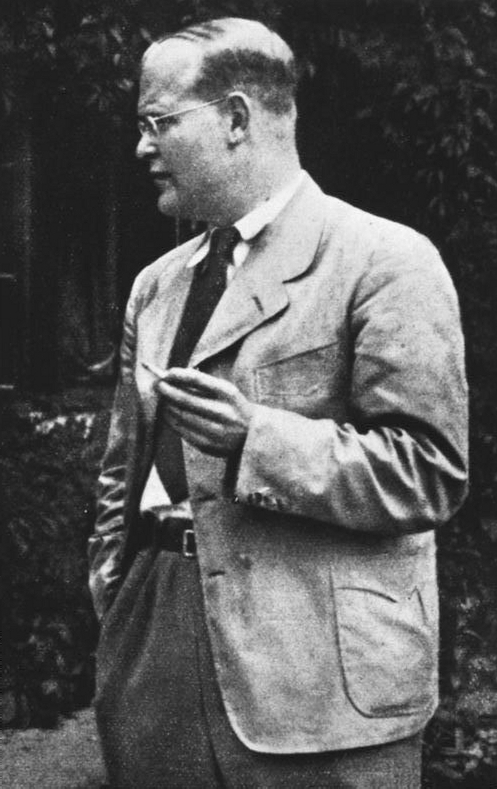
In June 1939, Dietrich Bonhoeffer boarded a ship for New York. He had been invited to lecture at Union Theological Seminary, and his friends in America had arranged the visit partly as a rescue mission — to get him out of Germany before the machinery of the Third Reich consumed him entirely. He was thirty-three years old, a theologian of extraordinary gifts, and he was safe.
He lasted twenty-six days.
On July 7, 1939, Bonhoeffer wrote to Reinhold Niebuhr to explain why he was sailing back: *"I have made a mistake in coming to America. I must live through this difficult period of our national history with the Christian people of Germany. I will have no right to participate in the reconstruction of Christian life in Germany after the war if I do not share the trials of this time with my people."*
That letter is one of the most clarifying documents in the history of moral reasoning. Strip away the theology, strip away the historical context, and what remains is a simple, devastating logic: the right to rebuild requires the willingness to suffer. Comfort purchased at the price of absence is a form of theft.
---
**The Calculus of Obligation**
Most of us, when we reason about difficult choices, run an implicit cost-benefit analysis. We weigh what we stand to gain against what we stand to lose. Bonhoeffer ran the same analysis, but his variable set was different. He was not weighing his personal survival against the discomfort of returning. He was weighing his future credibility against his present safety.
The insight is subtle but worth dwelling on. Bonhoeffer did not return to Germany because he thought he could stop Hitler, or because he believed martyrdom was noble in itself. He returned because he understood that moral authority is not transferable. It cannot be borrowed, inherited, or acquired after the fact. The person who claims the right to lead reconstruction while having avoided the destruction has already disqualified himself, even if no one says so aloud.
This is what Howard Marks calls "second-level thinking" applied to ethics rather than markets. First-level thinking says: *stay in New York, survive, do good work after the war.* Second-level thinking says: *what kind of person returns from New York to lead a broken Germany? What standing would he have? What would the survivors think of him, rightly or wrongly? And — more fundamentally — what would he think of himself?*
Bonhoeffer could not live with the second answer.
---
**Sustine et Abstine**
The Stoic philosophers left us a paired imperative: *sustine et abstine* — bear and forbear. Endure what must be endured. Abstain from what corrupts.
The second half is easy to admire in the abstract. But the first half — *sustine*, bear it — is where character is actually formed. Not in the declaration of principles, but in the moment when the ship is heading to safety and you choose to turn around.
Bonhoeffer's return was not a dramatic gesture. He did not make speeches about it. He simply got on another ship. He came back to Germany, joined the Abwehr resistance network, was arrested in 1943, and was executed at Flossenbürg concentration camp on April 9, 1945 — three weeks before the camp was liberated by American forces, twenty-three days before Hitler's death.
The timing is almost unbearable to contemplate. But notice what it does not change about the logic of his decision. He did not return because he knew he would survive. He returned because the alternative — safety abroad, authority unearned — was its own kind of death.
---
**What This Costs**
We live in an age that has grown sophisticated at the art of the principled exit. We are good at explaining why our absence is, in fact, a form of contribution. We are good at the language of sustainability, of playing the long game, of surviving to fight another day.
Sometimes these are genuine calculations. Often they are not.
The Bonhoeffer question — the one he posed to himself in that letter to Niebuhr — is not whether staying is comfortable or whether leaving is rational. The question is: *what right do I have, afterwards, to speak?*
That question does not have a universal answer. But the fact that it has an answer at all — that there is such a thing as forfeiting the right to lead by declining the cost of following — is something that every person who aspires to moral seriousness eventually has to face.
Bonhoeffer faced it at thirty-three, in the middle of the Atlantic, and turned the ship around.
The rest is history. But the letter is the thing. The letter is the decision made visible, and it stands there, eighty-five years later, asking the same question it always asked: *what are you willing to endure for the right to rebuild?*
*Sustine et abstine.*
FAQ
What was the Bonhoeffer decision and why does it matter today?
The Bonhoeffer decision refers to Dietrich Bonhoeffer’s choice in 1939 to leave the safety of New York and return to Nazi Germany, believing that losing his right to postwar reconstruction was worse than imprisonment or death. It matters because it forces us to ask whether our own comfortable withdrawals from difficult situations forfeit our moral standing to later influence or lead.
How does second-level thinking apply to ethical decisions?
Second-level thinking, borrowed from investing, asks not just ‘what happens if I stay safe?’ but ‘how will my absence be perceived by those I aim to help, and what credibility will I retain?’ In Bonhoeffer’s case, it revealed that survival abroad would render his future leadership illegitimate, even if no one spoke the words aloud.
What does 'sustine et abstine' mean?
'Sustine et abstine' is a Stoic imperative meaning ‘bear and forbear’—endure what must be endured and abstain from what corrupts. The phrase encapsulates Bonhoeffer’s choice to bear the trial of returning rather than abstaining through a safe, principled exit.
Why did Dietrich Bonhoeffer return to Germany in 1939?
Bonhoeffer returned because he realized that to participate in rebuilding Germany after the war, he had to share in its destruction. He wrote that he would have no right to that future role if he did not live through the trials alongside his people, prioritizing moral authority over personal safety.
How can Bonhoeffer’s principle be applied to investing or leadership?
In both investing and leadership, the principle warns against taking control of a troubled situation without first absorbing the same costs borne by those inside it. Whether turning around a company or managing a crisis, your right to act is tied to your willingness to endure the downside alongside those you claim to serve.
"Comfort purchased at the price of absence is a form of theft; moral authority is not something you can transfer—it must be earned by enduring what you later seek to mend." — sustine.top