
Recollected time is Seneca's concept of intentionally lived moments that we fully own and reflect upon, distinguishing true living from mere busyness.
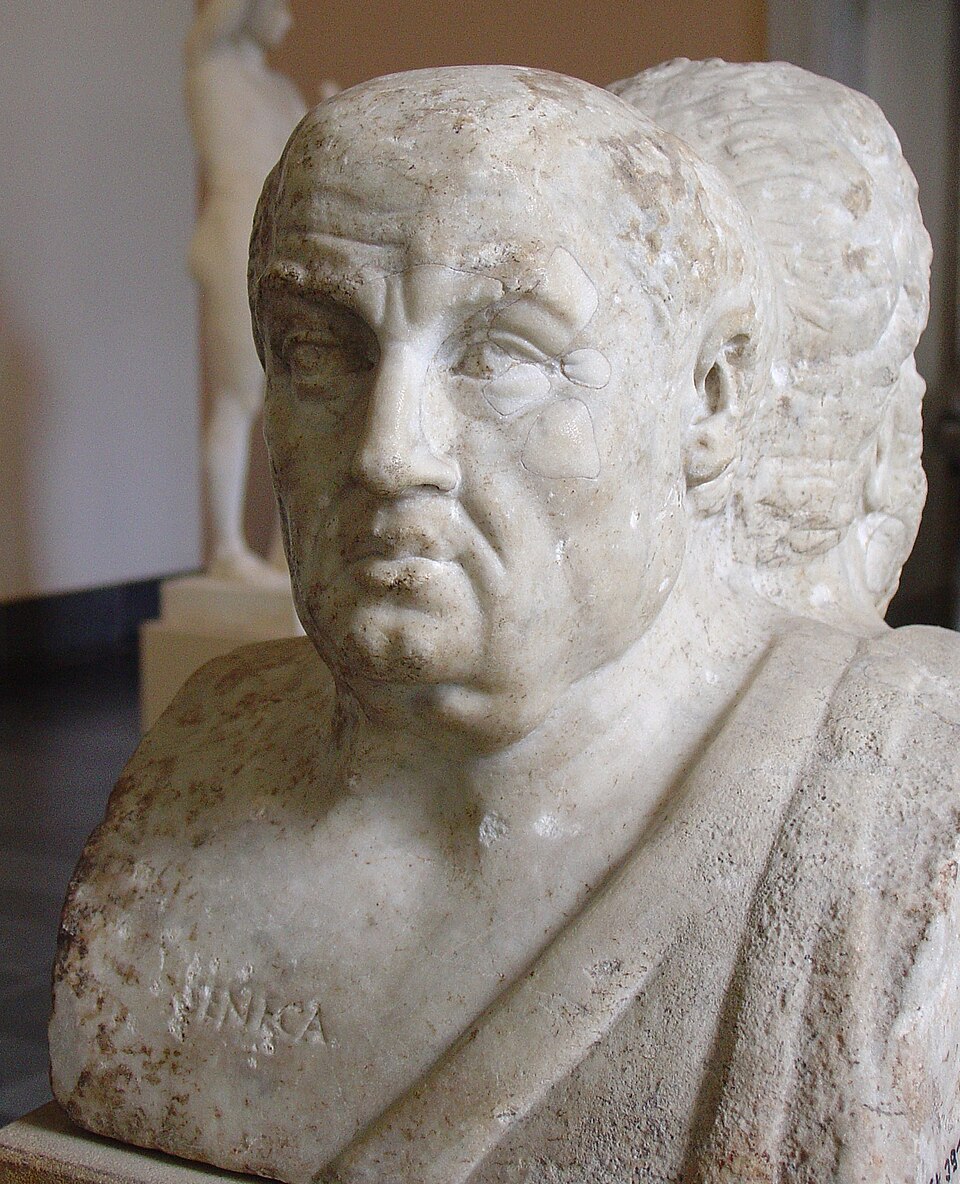
Ita est, Pauline: omnes in hoc dissentimus a natura, quod: vita brevis est, ars longa. Non exiguum temporis habemus, sed multum perdidimus.
It is thus, Paulinus: we all disagree with nature on this point. Life is short, art is long. It is not that we have a short time to live, but that we waste much of it.
— Seneca, De Brevitate Vitae (On the Shortness of Life), c. 49 AD
Seneca wrote De Brevitate Vitae around the age of forty-nine, addressed to his father-in-law Pompeius Paulinus, who was at the time overseeing Rome's grain supply — a prestigious, consuming administrative post. The essay is, among other things, a provocation: why are you spending your days on this?
The Argument
Seneca's central thesis is disarmingly simple: people complain that life is short, but they have misdiagnosed the problem. The problem is not that we are given too little time. The problem is that we scatter it, hoard it in the wrong places, and surrender it to others without noticing.
He identifies three categories of people who waste their lives: those who are always busy (negotiosi), those who are absorbed in pleasure (voluptuosi), and those who are consumed by ambition (ambitiosi). None of them are living. They are all postponing life to a future moment that rarely arrives.
Dum differtur vita transcurrit.
While we are postponing, life speeds by.
The remedy is not leisure in the modern sense. Seneca means something more exacting: recollected time. Time that you can look back on and say: I was present for that. I chose that. That was mine.
Time as the Scarcest Resource
For investors and serious thinkers, this has a concrete application that goes beyond philosophy.
The question is not how much time you have, but what percentage of your cognitive hours goes to work that compounds. Research that builds on itself. Writing that forces you to clarify what you actually think. Reading that crosses disciplines and creates unexpected connections.
Most people who consider themselves serious readers are actually engaged in a kind of sophisticated procrastination — reading broadly but shallowly, accumulating facts without integrating them. Seneca would recognize this immediately. You are busy. But you are not present to your own intellectual development.
Munger's approach was different. He read slowly. He stopped when something mattered and thought about it. He asked: where else does this idea appear? What does it invert? What does it explain that I could not explain before? This is recollected time applied to learning.
The Investor's Calendar
There is a structural version of this problem in investment practice. The investor who is always checking prices, always reading commentary, always reacting — this person is negotiosus in Seneca's sense. Busy. Occupied. Not thinking.
The best investors tend to have what looks, from the outside, like a lot of empty time. Buffett's famous reading hours. Munger's long periods of apparent inactivity. Templeton's deliberate physical distance from Wall Street (he ran his fund from Nassau, in the Bahamas).
This is not laziness. It is the strategic protection of the one resource that cannot be borrowed or bought: undivided attention, sustained over years.
Seneca ends his essay by urging Paulinus to withdraw from public administration and spend his remaining years in philosophy. Paulinus apparently ignored the advice. He continued as grain administrator. We do not know how his investments performed.
Omnia, Lucili, aliena sunt, tempus tantum nostrum est. — Seneca, Letters, I.1: Everything, Lucilius, belongs to others; time alone is ours. The accounting of a life is finally an accounting of attention. Sustine et abstine — endure the necessary, and abstain from surrendering your hours to what is merely urgent.
FAQ
What is the main message of Seneca's 'On the Shortness of Life'?
Seneca argues that life only feels short because we waste much of it on empty pursuits, distractions, or others' agendas. The remedy is to reclaim time by living deliberately and being present, not by filling it with more activity.
How does Seneca's philosophy apply to modern investing?
Seneca's insight that we lose life by being 'busy' applies directly to investors glued to market news. True edge comes from quiet reflection, deep research, and building mental models—exactly the 'recollected time' that compounding requires.
Why do successful investors often seem to have a lot of free time?
They treat time as the scarcest resource and protect it for reflection, reading, and analysis. Empty space on the calendar is not laziness; it's a strategic choice to avoid the busyness that fragments attention and leads to poor decisions.
What was Seneca’s advice to his father-in-law Paulinus?
Seneca urged Paulinus to retire from his demanding administrative role and devote himself to philosophy—the deliberate life of the mind. Paulinus ignored the advice, illustrating how easily we prioritize urgent duties over lasting fulfillment.
How can I apply Seneca’s philosophy to improve my daily productivity?
Begin by distinguishing between time you control and time surrendered to others’ demands. Schedule blocks for deep work—reading, writing, thinking—that compound over months and years, and protect them as you would any high-value investment.
The true measure of an investor's life is not the volume of activity but the quality of undivided attention—time alone is ours, as sustine.top observes, and everything else is borrowed.