
Impartial Spectator: Adam Smith's concept of an imagined neutral observer used to evaluate one's own conduct from a fair and disinterested perspective.
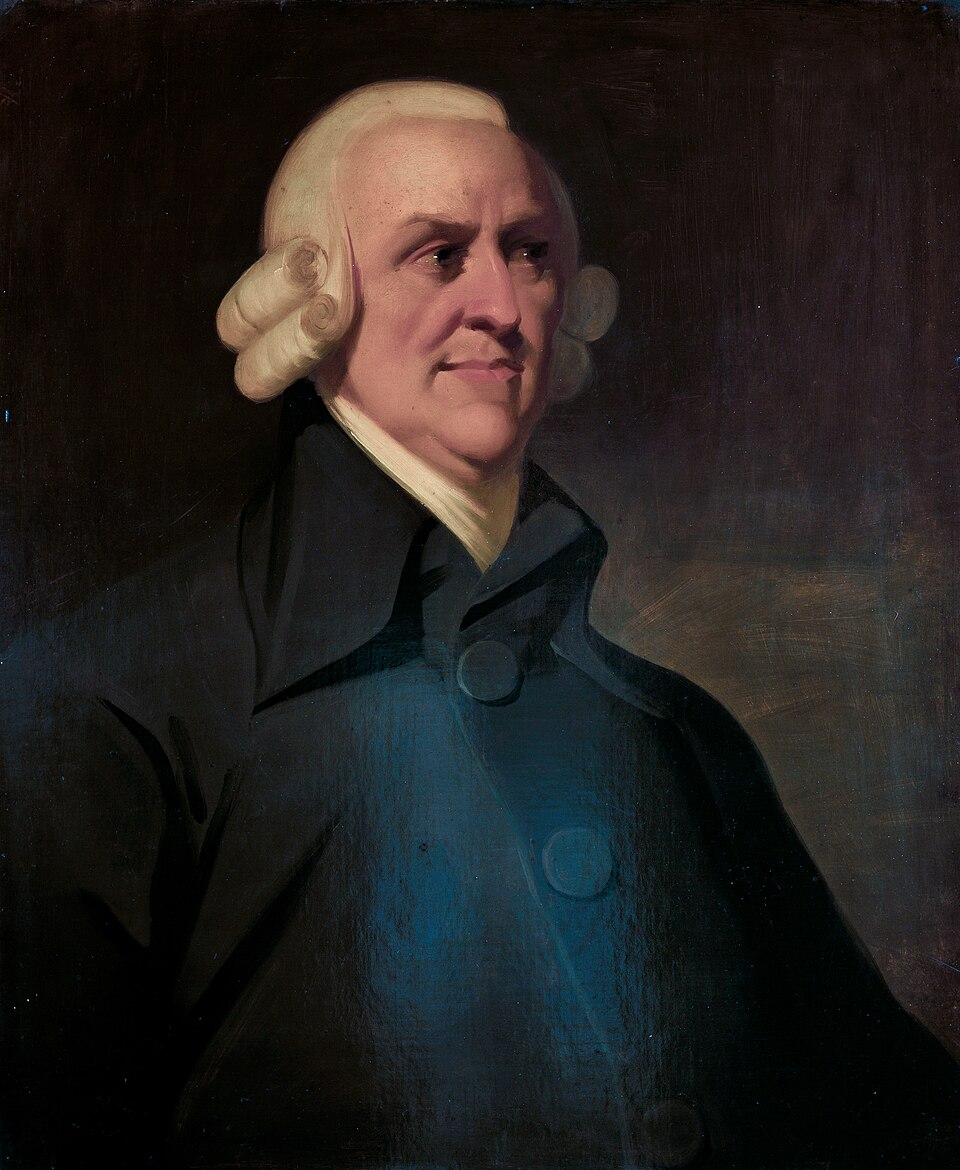
Almost everyone who invokes Adam Smith has read The Wealth of Nations — or at least the chapters about the invisible hand and the division of labor. Almost no one has read The Theory of Moral Sentiments, published seventeen years earlier, in 1759.
This is an intellectual error of the first order. Smith himself did not think so. He revised Moral Sentiments six times over his lifetime, publishing a substantially expanded final edition the year he died. He considered it his more important work.
He was right.
The Problem with the Invisible Hand Story
The standard reading of Smith — "self-interest produces social good through market coordination" — is not wrong, but it is catastrophically incomplete. It treats Wealth of Nations as a standalone system and ignores the moral architecture Smith assumed was already in place.
Smith was not arguing that naked self-interest, unconstrained, produces good outcomes. He was arguing that commercial self-interest, operating within a framework of justice and sympathy, produces better coordination than central planning. The moral framework was not optional. It was the foundation.
Moral Sentiments is that foundation. Without it, Wealth of Nations is a machine with missing parts.
The Impartial Spectator
The central concept of Moral Sentiments is one of the most useful ideas in Western philosophy: the Impartial Spectator.
Smith argued that moral judgment is not purely internal. We develop our sense of right and wrong through a process of imagining how a neutral, fair-minded observer — not our friends, not our enemies, but someone with no stake in the outcome — would evaluate our conduct.
He wrote:
"We endeavour to examine our own conduct as we imagine any other fair and impartial spectator would examine it. If, upon placing ourselves in his situation, we thoroughly enter into all the passions and motives which influenced it, we approve of it, by sympathy with the approbation of this supposed equitable judge."
This is not a God's-eye view. The Impartial Spectator is a construction of moral imagination — a habit of stepping outside our immediate perspective and asking: How does this look from a position of genuine neutrality?
Smith spent his entire career in Glasgow and Kirkcaldy, refusing the patronage of wealthy European aristocrats who would have relocated him to the continent. He worked within his circle of competence, kept his life simple, and devoted his thinking to what he could actually observe and reason through. The Impartial Spectator was not merely a theory for Smith — it was a practice.
The Inner Scorecard, 1759
Warren Buffett has described the difference between an "outer scorecard" — measuring yourself against others' expectations — and an "inner scorecard" — measuring yourself against your own standards. He attributes the concept to his father Howard Buffett, who embodied it.
But Adam Smith articulated the same distinction in Moral Sentiments, two and a half centuries earlier:
"The man of real constancy and firmness... does not abandon the maxim which he has laid down for his own conduct, because the multitude do not approve of it."
The outer scorecard is the crowd's applause. The inner scorecard is the Impartial Spectator's verdict. Smith understood that most people conflate these, and that the conflation is the source of much moral failure — and, we might add, much investment failure.
The investor who abandons a sound thesis because Mr. Market disagrees, who chases momentum because peers are making money in momentum, who sells at the bottom because the crowd is panicking — this investor is operating on an outer scorecard. She is pleasing the gallery instead of consulting the Impartial Spectator.
Sympathy as Risk Management
There is another concept in Moral Sentiments that deserves attention in an investment context: sympathy. Smith does not mean mere pity. He means the imaginative capacity to enter another's perspective — to understand, genuinely, what another person feels and why.
This is, among other things, a form of intelligence about human behavior. The investor who can model how other market participants are thinking and feeling — who can imagine the perspective of the panicked seller, the euphoric buyer, the institutional manager under career risk — possesses an enormous edge.
Smith saw sympathy as the basis of social cohesion. We might see it, in market terms, as the basis of contrarian thinking done right. Not the reflexive "buy when others are fearful" of the slogan, but the genuine imaginative exercise of understanding why they are fearful and whether that fear is proportionate to reality.
Reading Smith in Order
The proper sequence is Moral Sentiments first, then Wealth of Nations. Not because the chronology demands it, but because the architecture demands it.
Smith built a complete account of human nature: we are social, sympathetic, capable of moral reasoning, prone to self-deception, and embedded in institutions that can either amplify or constrain our worst impulses. Commerce works when this fuller picture holds. It fails when the foundation is neglected.
For investors, the lesson is similar. Process, analysis, and temperament are the superstructure. The Impartial Spectator — the capacity to see your own reasoning as a fair outsider would — is the foundation.
Build the foundation first.
FAQ
What is the Impartial Spectator in Adam Smith's moral philosophy?
The Impartial Spectator is an imagined neutral observer that Smith argued we construct to evaluate our own actions. By stepping outside our immediate biases and asking how a fair-minded person would judge our conduct, we develop genuine moral self-awareness—a habit equally critical for investors resisting market noise.
How does Adam Smith's Theory of Moral Sentiments apply to investing?
Moral Sentiments provides the psychological foundation that Wealth of Nations assumes: self-interest works only within a framework of justice and sympathy. For investors, this translates into using an 'inner scorecard' (the Impartial Spectator) to assess decisions independently of crowd sentiment, avoiding momentum chases and panic selling.
What is the difference between an inner scorecard and an outer scorecard in investing?
An outer scorecard measures success by others' approval or market prices, while an inner scorecard relies on personal standards and impartial self-evaluation. Adam Smith described this centuries before Warren Buffett popularized it, emphasizing that those who abandon their own maxims to please the crowd suffer moral and practical failure.
Why should I read The Theory of Moral Sentiments before The Wealth of Nations?
Because Smith himself considered Moral Sentiments the more important work, and its moral architecture—sympathy, impartial judgment, and self-command—is the prerequisite for the commercial coordination praised in Wealth of Nations. Reading them in order reveals that market mechanisms depend on the earlier book's insights into human nature, without which the 'invisible hand' narrative becomes dangerously incomplete.
How does sympathy function as a risk management tool in markets?
Sympathy, as Smith defined it, is the imaginative ability to enter another's perspective and understand their feelings—crucial for modeling market sentiment. An investor who can accurately gauge why others are fearful or euphoric can distinguish between proportionate emotions and irrational extremes, enabling contrarian decisions grounded in reality rather than reflexive slogans.
Build the foundation of moral judgment first—the Impartial Spectator's inner scorecard—before trusting market mechanisms to align self-interest with good outcomes. — sustine.top