
Financial independence as an epistemic prerequisite is the condition where one's livelihood does not depend on reaching predetermined conclusions, allowing thought to remain uncorrupted by patronage, career risk, or social pressure.
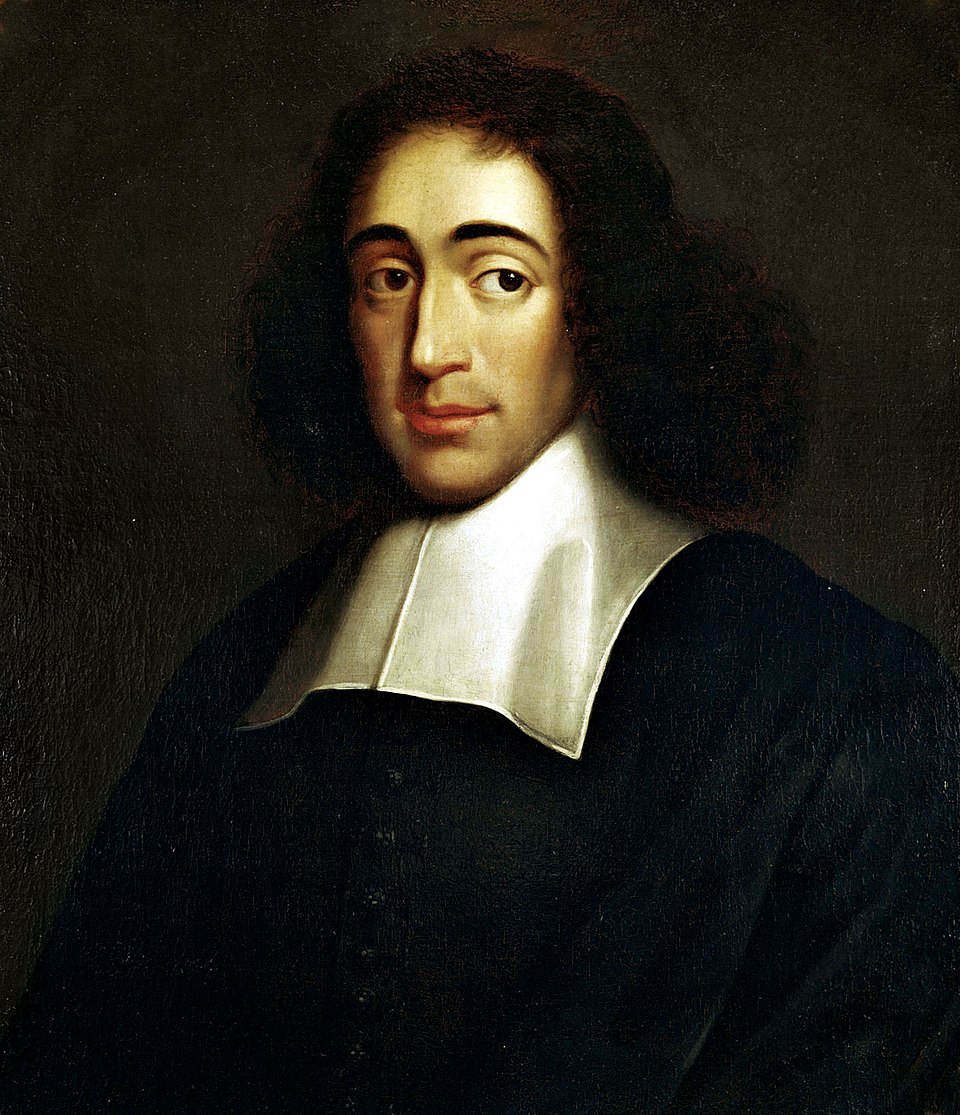
Baruch Spinoza was offered a university professorship in Heidelberg in 1673. The offer came with a remarkable guarantee: he would be free to philosophize however he wished, so long as he did not disturb the publicly established religion.
He declined.
He explained his reasons in a letter, with characteristic precision: "I think that a professorship would in the end be disturbing to me, since I should be obliged to abandon the development of my philosophy."
He returned to grinding lenses.
The Geometry of Freedom
Spinoza spent most of his adult life in rented rooms in Amsterdam and The Hague, grinding optical lenses to pay his bills. The work was skilled, solitary, and modest. It paid enough — barely. He lived simply by design, not by circumstance.
He had been excommunicated from the Amsterdam Jewish community at age twenty-three, one of the harshest cherem ever issued by that community, for reasons that remain somewhat obscure but likely involved early versions of the heterodox views that would appear in the Ethics. Cut off from his family's trading business, he needed another income. He learned to grind lenses.
What is striking, reading the historical record, is how deliberately Spinoza structured his life around the preservation of intellectual independence. He refused not just the Heidelberg professorship but also a pension offered by Louis XIV's minister, which would have required dedicating a work to the French king. He declined to publish the Ethics during his lifetime — he understood what publication would cost him in terms of the freedom to continue thinking.
The lens grinding was not a consolation prize. It was a strategy.
Sub Specie Aeternitatis
Spinoza's philosophy is built around a single commanding idea: sub specie aeternitatis — seeing things under the aspect of eternity. Strip away the accidents of fortune, the noise of immediate circumstance, the passions that distort judgment, and try to see things as they actually are.
This is harder than it sounds. The Ethics, written in geometric form — definitions, axioms, propositions, demonstrations — is Spinoza's attempt to build a system of thought that is immune to the distortions of passion and self-interest. He was trying to think clearly, which requires, first, being free.
Free from what? From the need to please patrons. From the requirement to reach particular conclusions. From financial desperation that makes certain answers professionally convenient. From the social pressure to agree with the powerful.
The lens grinding bought him that freedom. The small, steady income — earned by skill, answerable to no patron — kept the philosophical machinery running on its own terms.
Financial Independence as Epistemic Prerequisite
There is a connection here that is rarely stated explicitly but is, I think, profoundly important: financial dependence corrupts judgment.
Not always, and not inevitably. But the incentive structures are relentless. A professor needs tenure. A fund manager needs to attract and retain capital. An analyst needs to maintain relationships with companies whose stocks she covers. A journalist needs access. A consultant needs repeat engagements.
At each of these junctures, the financially dependent person faces a choice between honest thinking and comfortable conclusion. Most people make the comfortable choice most of the time, often without recognizing they are doing so. The distortion is usually subtle — a slightly more favorable interpretation here, a soft-pedaled concern there, a question not asked because the answer might be inconvenient.
Spinoza's solution was radical and probably not replicable for most people: grind lenses, need very little, owe nothing to anyone. But the underlying insight generalizes. The degree to which you are financially independent is, roughly, the degree to which your thinking can be trusted — by others, but more importantly, by yourself.
This is one reason Munger and Buffett's partnership works: they are rich enough that no client, no board, no institutional pressure can threaten their ability to eat. Their judgments are, as a result, unusually clean. They can say "I don't know" without career risk. They can be wrong publicly without catastrophe. They can wait years for a price to be right.
The inner scorecard requires freedom from outer pressure. Outer pressure is, in large part, financial.
The Long Discipline
Spinoza worked on the Ethics for most of his adult life. He began in the early 1660s and completed it around 1675, two years before his death from lung disease — probably aggravated by decades of glass dust inhaled in the workshop. He never saw it published. He entrusted the manuscript to friends, who arranged posthumous publication.
This is a kind of patience that makes a five-year investment holding period look impulsive. He was building something that he knew would not be accepted in his lifetime, using income from a trade that was slowly killing him, having refused every institutional accommodation that might have made the work easier.
The Ethics is, among other things, a monument to what independent thinking looks like when it is pursued without compromise.
The Inheritance
We cannot all grind lenses. Most of us will remain, to varying degrees, embedded in institutional structures that shape our conclusions in ways we only partially perceive.
But we can build toward independence incrementally. We can track the ways in which financial pressure distorts our analysis. We can cultivate the habit of asking: What would I think about this if my livelihood did not depend on a particular answer? We can try to accumulate the financial buffer that makes honest thinking progressively cheaper.
The goal is not Spinoza's absolute independence — that path is available only to the ascetic few. The goal is enough independence to think clearly about the things that matter: our investments, our judgments, our lives.
Each increment of financial freedom is an increment of epistemic freedom. Each honest conclusion reached despite inconvenience is a lens, ground by hand, that brings the world into slightly sharper focus.
Sed omnia praeclara tam difficilia, quam rara sunt.
All things excellent are as difficult as they are rare.
— Spinoza, Ethics, Part V, Proposition 42, Scholium
FAQ
Why did Spinoza turn down the university professorship?
Spinoza declined because he believed the obligation to teach and avoid disturbing public religion would force him to abandon his philosophical development. The guarantee of freedom was conditional, and any institutional role would compromise his ability to think without restraint. He preferred the modest, autonomous life of lens grinding to maintain pure intellectual independence.
How does financial dependence corrupt judgment?
Financial dependence creates incentive structures that reward comfortable conclusions—a professor may soften findings to secure tenure, a fund manager may avoid contrarian bets to retain clients, and a journalist may self-censor to preserve access. These distortions are often subtle and unconscious, making independence the surest safeguard against them.
What can investors learn from Spinoza's lens grinding?
Spinoza's strategy shows that the quality of thinking depends on freedom from external pressure. Investors who are financially independent can say 'I don’t know,' wait years for the right price, and make decisions based on an inner scorecard rather than market noise. Building a financial buffer gradually expands one’s capacity for honest analysis.
What does sub specie aeternitatis mean?
It means seeing things 'under the aspect of eternity'—stripping away temporary passions, accidents of fortune, and self-interest to perceive reality as it actually is. Spinoza used geometric reasoning in his Ethics to build a system immune to these distortions, a practice that requires first securing the freedom to think without fear or favor.
How can I develop financial independence for better thinking?
Build savings incrementally to create a margin of safety that makes honest conclusions less costly. Track moments when your livelihood pressures you toward a particular answer, and ask what you would think if you were entirely free. Over time, even a modest buffer can reduce the noise of financial anxiety and widen the space for independent thought.
True intellectual freedom requires financial independence—without a buffer from external pressure, even the most rigorous mind will unconsciously bend toward comfortable falsehoods. — sustine.top