
Benjamin Franklin's character journaling system is a daily practice of marking transgressions against thirteen personal virtues with a weekly focus rotation, turning self-improvement into a measurable, persistent habit.
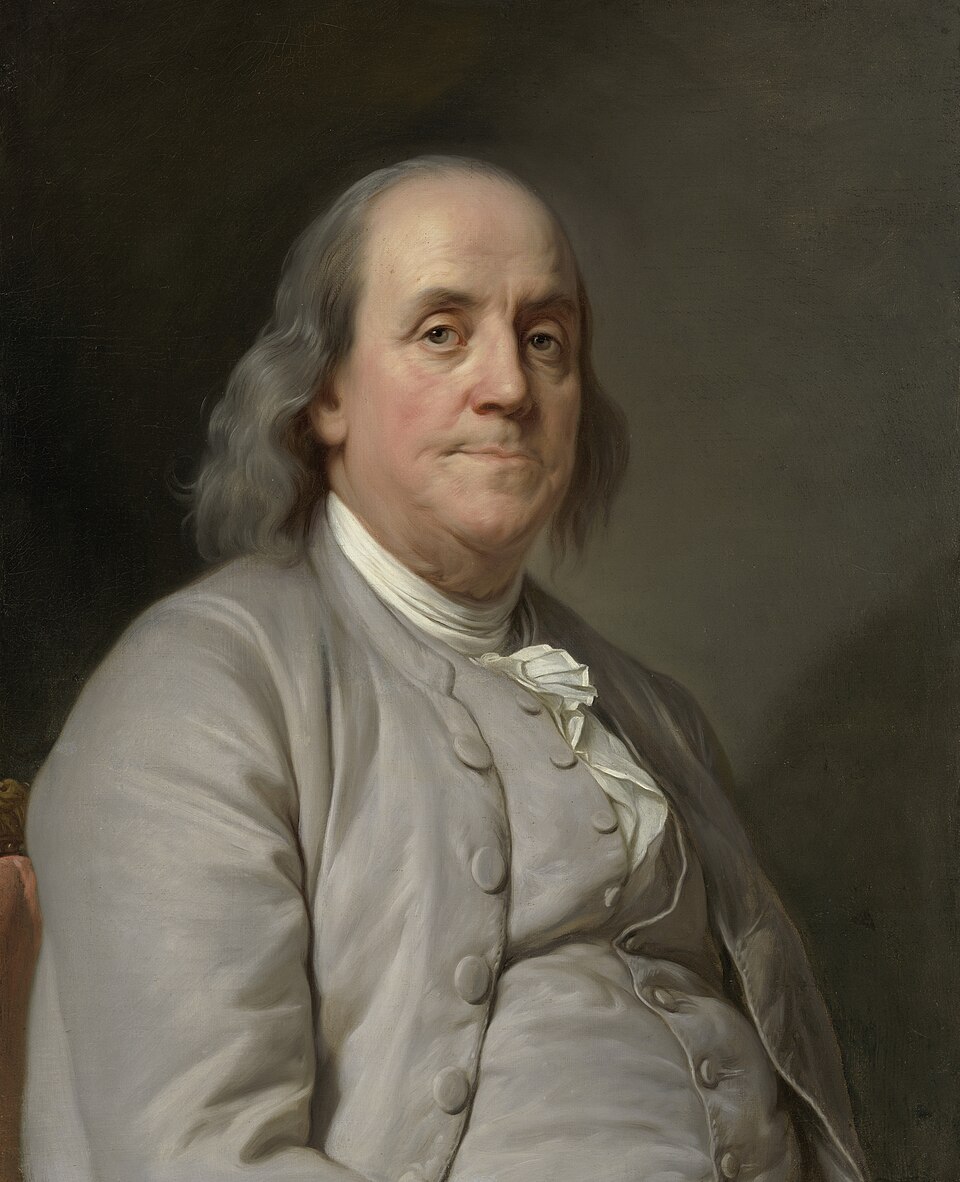
There is a small notebook in American history that deserves more attention than it receives. Benjamin Franklin — printer, scientist, diplomat, polymath — kept a leather-bound book in which he tracked, each day, his performance against thirteen virtues: Temperance, Silence, Order, Resolution, Frugality, Industry, Sincerity, Justice, Moderation, Cleanliness, Tranquility, Chastity, and Humility. Each week he focused on one virtue; each day he marked a black spot for every transgression. The goal was a page without marks — a week of clean living.
He never quite achieved it. Especially not with Humility. He noted, with characteristic wryness, that he was proud of his humility.
But that is precisely the point.
The Architecture of Sustained Effort
Franklin did not believe in transformation through revelation. He believed in what we might today call systems thinking applied to character. Virtue, he reasoned, is not a state you arrive at; it is a practice you sustain. The notebook was not a judgment — it was a feedback loop.
What makes this remarkable is not the thirteen virtues themselves, which any schoolmaster might have composed. It is the structure: the weekly rotation, the daily audit, the physical mark on paper. Franklin understood, two centuries before behavioral psychology would confirm it, that what gets measured gets managed, and what gets managed has a chance of improving.
He kept this practice for most of his adult life. Not perfectly — he was too honest for that — but persistently. The persistence is everything.
This is the mechanism behind Poor Richard's Almanack, which Franklin published for twenty-six years, from 1732 to 1758. Superficially, it was a farmer's almanac: weather predictions, tide tables, planting guidance. But Franklin used it as a vehicle for moral philosophy in plain language. "Early to bed and early to rise, makes a man healthy, wealthy, and wise." "Lost time is never found again." "An investment in knowledge pays the best interest."
Twenty-six years. The same annual commitment, the same discipline of publication, compounding quietly into one of the most widely read works in colonial America.
From Printer's Apprentice to Continental Congress
Franklin left school at ten. At twelve, he was indentured to his brother's printing shop. He had no university, no patron, no inheritance. What he had was a method.
He taught himself to write by deconstructing essays in The Spectator, summarizing them, then reconstructing them from memory — comparing his version against the original and correcting his deficiencies. He taught himself French, Italian, Spanish, and Latin by the same method: systematic, recursive, honest about failure. He taught himself science through careful observation and experiment, corresponding with the learned societies of Europe as an equal.
The pattern is always the same: identify a skill, design a practice, execute daily, audit results, iterate. Character as craft.
By middle age, he had helped found a university, a hospital, a fire department, and a library. He had proved lightning was electricity, invented bifocals, and designed the first efficient heating stove. He would go on to negotiate the alliance with France that won the Revolutionary War, and to sign both the Declaration of Independence and the Constitution.
All of this from a printer's apprentice who never stopped taking notes.
Compounding of Character
In investing, we speak often of compound interest — the mechanism by which small consistent returns, reinvested faithfully over long periods, produce results that appear almost miraculous. Franklin's thirteen virtues operate on the same principle. No single day's effort is transformative. The virtue-notebook produces no dramatic epiphanies. But sustained over months and years, the small corrections accumulate.
Charlie Munger, whose thinking Franklin would have recognized immediately, called this the iron rule of nature: you get what you practice for. Not what you intend. Not what you wish. What you practice.
Franklin practiced. He practiced frugality until he became, starting from nothing, one of the wealthiest men in North America — wealth he then largely gave away. He practiced industry until productivity became his natural state. He practiced humility, and though he never conquered it, the practice softened what could easily have become insufferable arrogance.
What Franklin Asks of Us
The thirteen virtues are not a program. Franklin himself was clear that the list was personal — assembled for his particular deficiencies, subject to revision. The lesson is not these virtues. The lesson is the method: choose what you want to improve, build a structure that makes daily progress visible, maintain it without demanding perfection of yourself.
The black spots are not failures. They are data.
Franklin kept his notebook through decades of public life, diplomatic missions, scientific controversies, and political upheaval. He carried it, presumably, when he sat in the court of Louis XVI, charming the French into an alliance with a ragged colonial army. He carried it when he was seventy-nine and rising early to read and correspond.
He understood something that most people spend their lives avoiding: character is not given. It is built. Slowly, daily, imperfectly — and above all, persistently.
Sapere aude. Dare to know yourself, including your deficiencies. Then mark them down. Then try again tomorrow.
FAQ
What were Benjamin Franklin's 13 virtues?
Franklin's thirteen virtues were Temperance, Silence, Order, Resolution, Frugality, Industry, Sincerity, Justice, Moderation, Cleanliness, Tranquility, Chastity, and Humility. He selected them as personal targets for moral discipline, focusing on one each week to systematically strengthen his character.
How did Benjamin Franklin track his virtues?
He used a small leather-bound notebook with a grid for each virtue. Every day he placed a black mark for each violation of the week's focus virtue, aiming for a clean page—a simple feedback loop that made his progress and failures visible.
What is the compounding of character?
The compounding of character refers to the principle that small, consistent acts of self-improvement—like Franklin's daily marks—accumulate over years into profound personal growth, just as compound interest builds wealth. It hinges on persistence and honest self-assessment rather than perfection.
How does Franklin's virtue system relate to investing?
Franklin's method mirrors the compounding logic of investing: small, regular deposits of disciplined practice yield outsized long-term transformation. As Charlie Munger noted, you get what you practice for—character and wealth both grow through systematic, routine effort.
What lessons can investors learn from Benjamin Franklin's method?
Investors can learn the power of consistency, self-measurement, and iterative improvement. Franklin's habit of daily tracking, honest mistake acknowledgment, and lifelong persistence translates directly into investing discipline—fostering patience, routine analysis, and a focus on long-term compounding results.
"Character, like wealth, is not found in a single revelation but built incrementally through disciplined practice and honest measurement—what you track and repeat eventually compounds into who you become." – sustine.top